
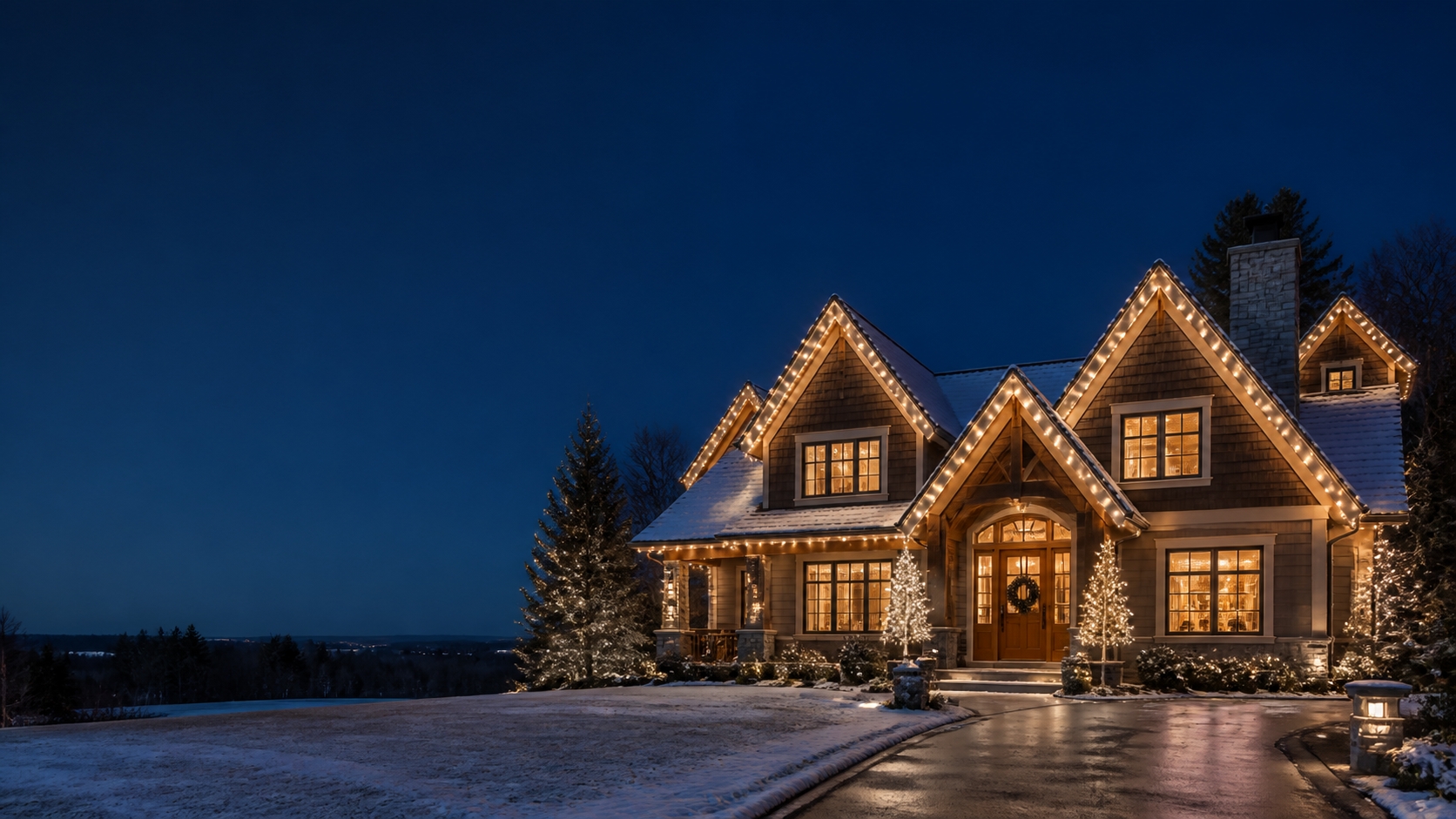



Holiday & Architectural Lighting in Boston
Design, installation, mid-season service, January takedown and off-season storage for homes and businesses. One crew, one invoice, no ladders.

What we install
Four ways to light a property, one crew
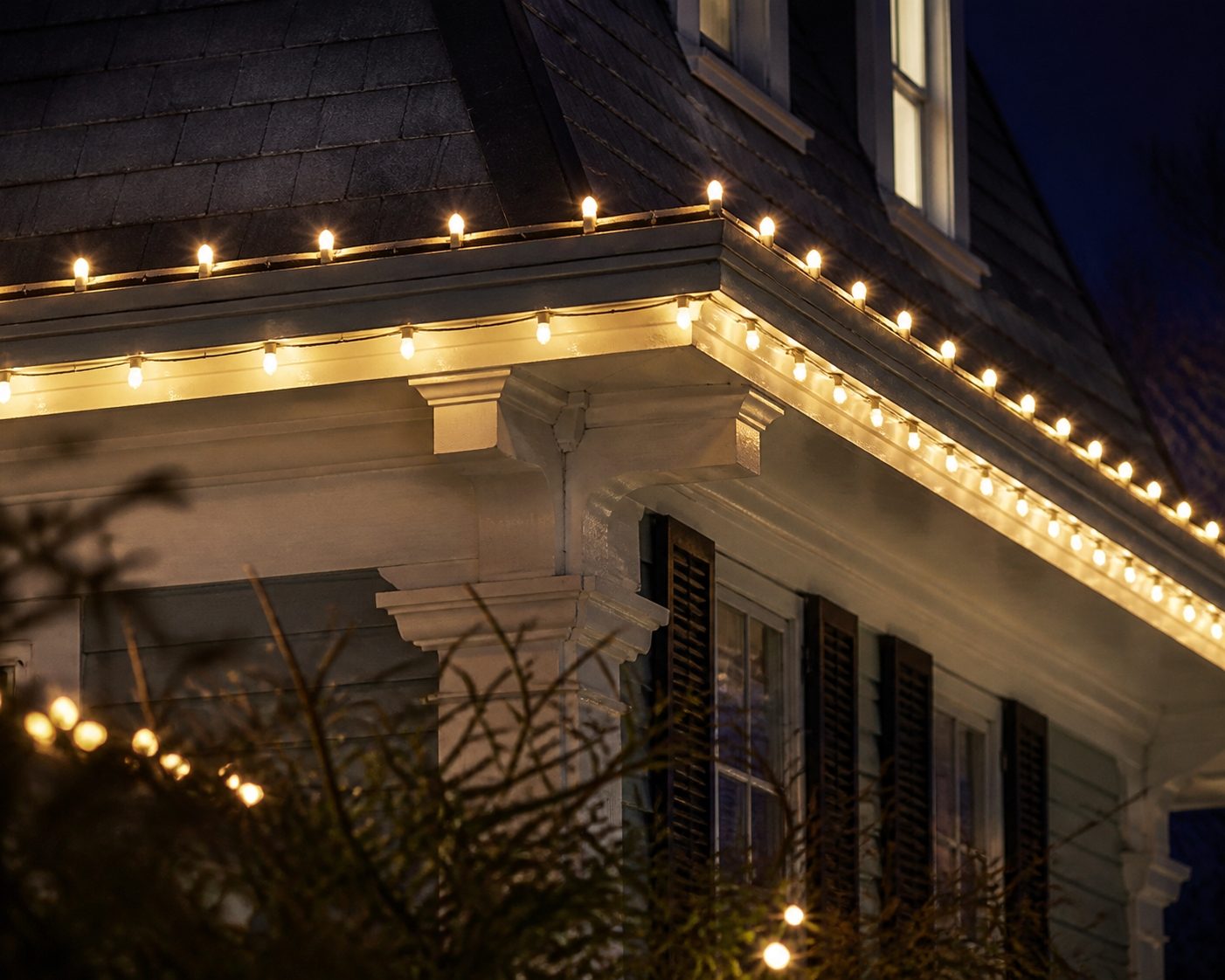
Christmas Light Installation
Outdoor Christmas lights for houses and condos — rooflines, windows, wreaths, garland, tree wraps and pathways.
Explore →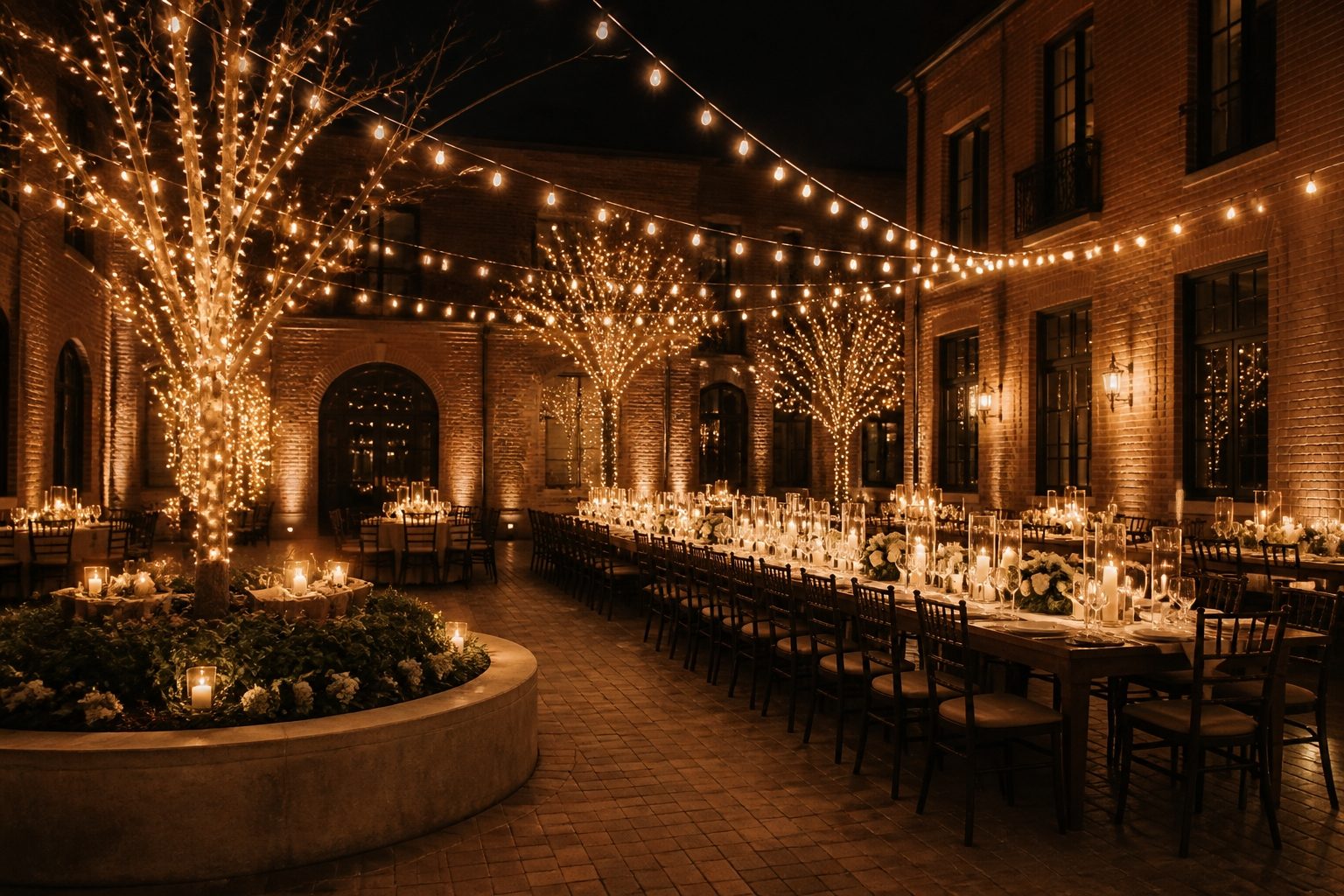
Holiday & Event Lighting
Weddings, corporate parties, Halloween, July 4th, store openings and photo shoots.
Explore →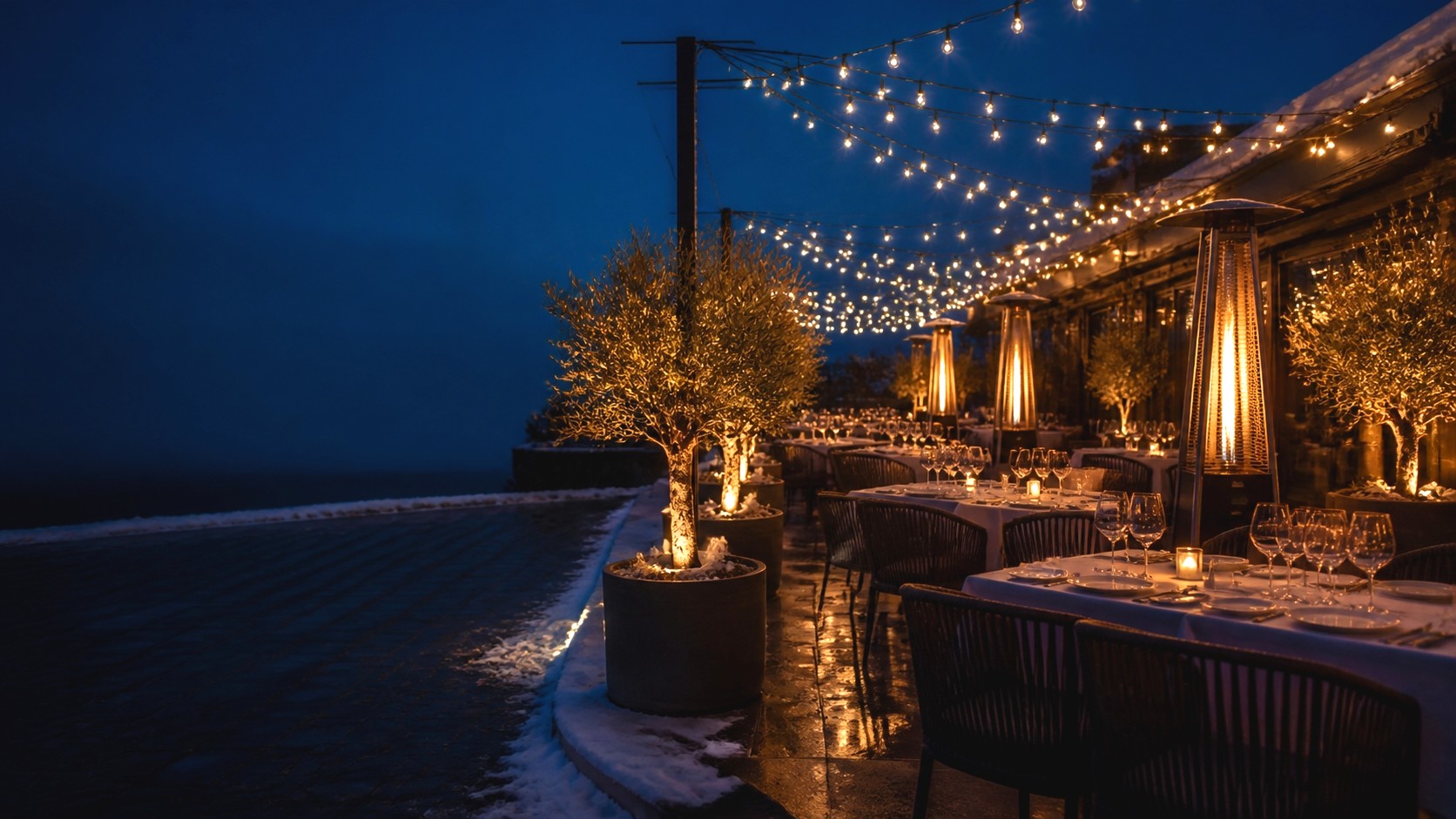
Commercial Outdoor Lighting
Storefronts, restaurants, offices, hotels, condo buildings and multi-site portfolios.
Explore →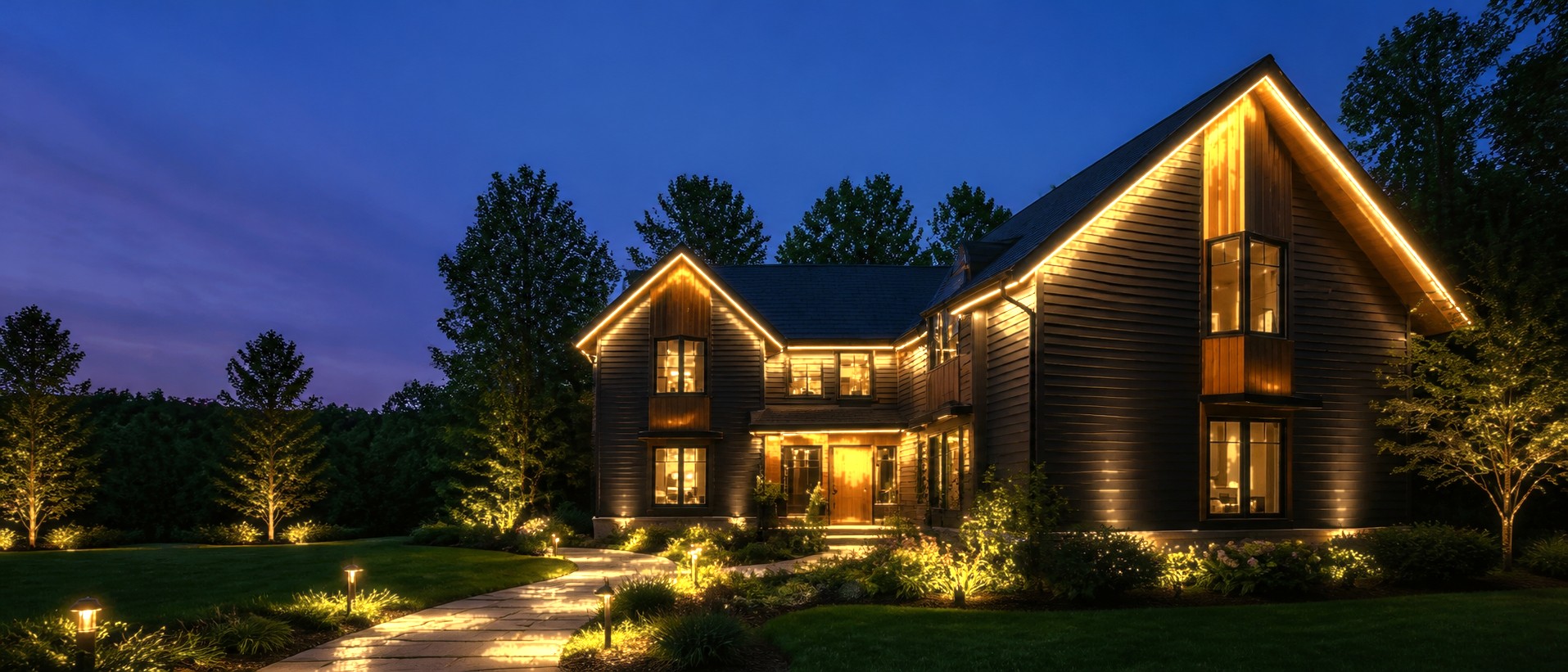
Permanent Lights
App-controlled LEDs tucked under the eave. Any color, any holiday, no annual visit.
Explore →
Local guide · Boston
Lighting Permits in Boston: When You Need One and Who Issues It
A plug-in holiday roofline that leaves existing wiring untouched is different from permanent accent lighting, a new exterior receptacle, or altered circuitry. Boston treats electrical installations, alterations, and repairs as permit work; review the electrical permit fees and application requirements before hardwiring a system.
| TRIGGER | APPROVAL | ISSUED BY |
|---|---|---|
| New wiring, receptacle, fixture, or service work | Electrical Permit | Boston Inspectional Services |
| Lift, staging, or work restricting a sidewalk or street | Street Occupancy Permit | Boston Public Works |
| Public event lighting in a park or civic location | Event or park approval | City of Boston |
- Licensed filing: Only the licensed contractor performing electrical work may apply, and work cannot begin before the permit is issued.
- Historic facades: Permanent visible attachments in Beacon Hill, Back Bay, Bay Village, or the South End may also need design review for historic districts.
- Public events: A park, City Hall Plaza, Faneuil Hall, or similar public-facing event needs site planning under Boston outdoor public-event permitting guidance.
1 City Hall Square, Room 715
Boston, MA 02201
Phone: 617-635-4911
Official Website
Power in Boston: Utility, Rates and Efficiency Programs
For a seasonal display, circuit capacity matters more than fixture count: LED runs keep demand low, while a permanent system, added receptacle, or overloaded existing circuit can turn a lighting project into licensed electrical work. Boston’s Specialized Energy Code status makes efficient equipment and sensible controls a practical part of commercial planning.
- Control the schedule: Timers, photocells, occupancy sensors, and programmed shutoff reduce unnecessary run time.
- Commercial incentives: Massachusetts commercial lighting and controls incentives can apply to qualifying integrated controls and exterior fixtures, subject to metering, territory, and product eligibility.
- Plan the receptacle: An exterior receptacle is often the surprise cost because adding it changes the electrical system and requires permitted electrician work.
- Permanent systems: Use equipment and installation methods aligned with the Massachusetts electrical code effective April 2026.
The Lighting Year in Boston: Seasons, Holidays and Deadlines
Boston’s holiday rush concentrates around Thanksgiving, December celebrations, and New Year’s events, when narrow streets, dense commercial blocks, and limited access windows make late scheduling restrictive. The same roofline can be installed earlier in autumn, but November bookings mean choosing from remaining crew capacity and hardware.
| SEASON | WORK THAT FITS | PLANNING FOCUS |
|---|---|---|
| Late summer and autumn | Permanent systems and early holiday installs | Electrical scope and historic review |
| November and December | Holiday displays and storefront lighting | Remaining installation capacity |
| Winter removal | Take-downs and service calls | Safe access and weather windows |
| Spring and summer | Event and commercial planning | Site plans and public-space coordination |
- Public-space lead time: A Street Occupancy Permit application is due at least seven business days before public space is needed.
- Event layouts: Outdoor public events require venue approval and a detailed site plan under Boston outdoor public-event permitting guidance.
- Removal matters: Schedule takedown with the original install so clips, cords, and temporary hardware do not linger through winter weather.
Liability for Exterior Lighting and Display Injuries in Massachusetts
Property owners remain responsible for conditions on their property, while an installer should carry appropriate insurance and provide a certificate when requested. A loose cable, unstable decoration, damaged facade attachment, or unpermitted hardwire can become the owner’s claim, repair, and resale issue as well as an installer-performance issue.
- Document the scope: Keep the proposal, hardware plan, permit record, inspection outcome, and removal agreement with property files.
- Match work to credentials: New wiring and permanent fixtures belong with a licensed contractor under the Boston electrical permit process.
- Protect shared buildings: Condominium associations, landlords, and commercial managers should define approval authority, access, restoration, and who monitors displays after storms.
- Use care near public paths: Lighting that creates a trip hazard or directs people into an unsafe route creates exposure beyond the display itself.
Pedestrian Access and Accessibility Rules Around Displays
On Boston’s tight sidewalks, a cable ramp, planter, queue barrier, lift, or decoration that narrows the walking route is a barrier rather than a precaution. Projects that obstruct or close a sidewalk require an ADA-compliant pedestrian detour under the Boston Street Occupancy Permit requirements.
- Keep routes open: Run cords overhead where safely appropriate or entirely within private property; do not place temporary wiring across pedestrian travel paths.
- Stage deliberately: Lifts, fencing, and delivery materials need a public-way plan when they restrict sidewalk or street access.
- Protect entrances: Keep building doors, curb approaches, ramps, and accessible routes free of display bases and loose connections.
1 City Hall Square, Room 714
Boston, MA 02201-2024
Phone: 617-635-4900
Official Website
Neighborhoods we serve in Boston
Installation planning changes block by block in Boston, from compact historic townhouses to wider outer-neighborhood residential lots and active commercial corridors.
- Beacon Hill: Historic facades and close street frontage call for discreet attachment plans and careful review of permanent visible changes.
- Back Bay: Tall townhouses and busy sidewalks make roofline access, lift staging, and pedestrian protection central to the install plan.
- Bay Village: Brick rowhouse frontage rewards low-profile lighting layouts that preserve masonry and keep narrow sidewalks clear.
- South End: Rowhouse entries, brownstone details, and mixed residential-commercial blocks benefit from tailored fixture placement and timed controls.
- North End: Dense streets and storefront activity favor compact display footprints with no cords or décor extending into pedestrian routes.
- Charlestown: Varied historic homes and elevated rooflines often require a detailed access plan before seasonal installation begins.
- Fenway-Kenmore: Mixed-use properties and event-day foot traffic make storefront lighting and safe service timing especially important.
- Hyde Park: More suburban-context properties can accommodate broader roofline runs, tree wrapping, and permanent exterior-lighting layouts.
2026 season
Install dates are going first. They always do.
Send us your address and a photo of the front of the house. You will get a fixed price and two or three available install windows, usually within one business day.